
Blog
Increasing Time Until Condensation: Advanced Applications of 3M™ Glass Bubbles (Part 2)
Lab-validated 3M™ Glass Bubbles S22 performance: up to 45 minutes extended condensation delay
Explore real test results, optimized S22 formulations, and why lower dry-film density extends condensation resistance.
Moisture control remains one of the most persistent challenges in architectural coatings. While introductory (Part 1) anti-condensation paints offer basic moisture-management capabilities, advanced performance requires deeper engineering of thermal conductivity, dry-film density, and CPVC balance.
This second part explores the scientific mechanisms behind condensation delay, using validated laboratory data from 3M™ technical studies and optimized test formulations.
This second part explores the scientific mechanisms behind condensation delay using validated laboratory data from 3M™ technical studies and optimized test formulations.
If you haven't read Part 1 yet, start there for the fundamentals.
Table of Contents:
Related 3M™ Glass Bubbles Articles
The Technology Behind Anti-Condensation Paints (Part 1)
Revolutionizing Paint and Coating Industry with 3M™ Glass Bubbles
Enhancing Wall Fillers with 3M™ Glass Bubbles
Understanding the Science Behind Condensation Formation
Condensation occurs when surface temperatures fall below the dew point.
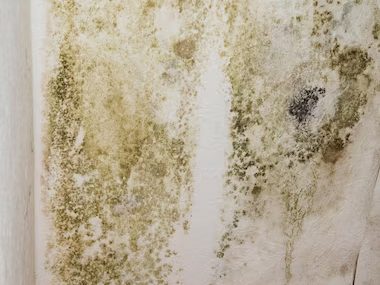
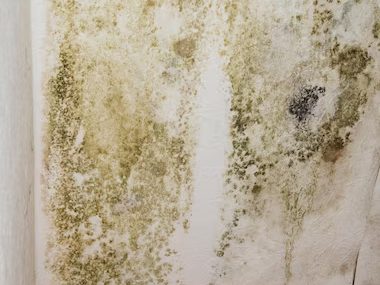
The 3M™ technical paper shows that excessive condensation leads to persistent dampness, mold, and long-term degradation of substrates. Improving thermal insulation at the paint-film level is the most direct way to raise surface temperature and extend condensation time.
Thermal Conductivity: The Core Principle Behind Anti-Condensation Performance
A coating’s thermal behavior is defined by:
- Thermal conductivity (K-value)
- Dry-film density
The technical study confirms:
Lower K-value → warmer surface → longer time until condensation.
K-Values of Glass Bubbles vs Standard Fillers
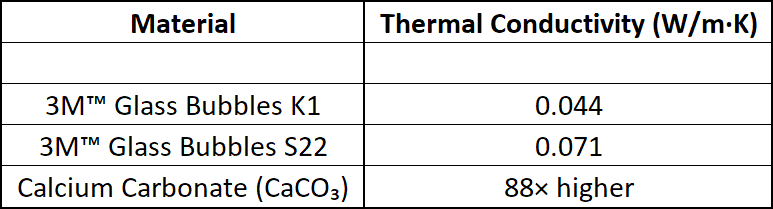
Table 1, 3M Technical Paper
Dry-Film Density: A Critical Performance Driver
The study evaluated multiple commercial anti-condensation paints vs. a standard wall/ceiling paint.
(See Table 2, 3M Technical Paper)
Key findings:
- Standard wall paint: 24 min
- Commercial anti-condensation paints: 20–44 min
- Best commercial product (#5): 44 min, dry-film density 0.79 g/cc
- Higher density = lower condensation resistance
The relationship was nearly linear:
Lower dry-film density = longer condensation delay.
This is the fundamental reason 3M™ Glass Bubbles outperform traditional fillers.
Test Method (Scientific Setup)
The condensation performance was measured using 3M’s controlled chamber method:
- High-humidity chamber set at 22°C (dew point 19–20°C)
- Cold chamber at 3°C
- Painted aluminum panels placed between the chambers
- Measured parameter: Time until first drop of condensation forms
This test method provides accurate, repeatable performance differentiation.
Optimized Anti-Condensation Formulation with 3M™ Glass Bubbles S22
(Table 3, 3M Technical Paper)
Optimized S22 formula properties:
- Wet density: 0.97 g/cc
- Dry density: 0.95 g/cc
- PVC: 60%
- Film below CPVC: 1.16 ratio
- Glass Bubbles loading: 11 wt% / 50 vol%
- Condensation time: 45 minutes
This value surpasses several market products tested, making it one of the highest-performing anti-condensation paints in the study.
Why S22 Glass Bubbles Deliver Superior Performance
✔Low thermal conductivity (0.071 W/m·K) → reduced heat loss
✔ Low dry-film density → longer condensation delay
✔ Formulation below CPVC → non-porous, durable film
✔ Absence of CaCO₃ → avoids thermal bridging
These combined advantages create one of the most effective moisture-control coating systems available.
Key Applications
- High-humidity interiors
- Bathrooms & kitchens
- Basements & semi-underground room
- Garages & storage spaces
- Cold surfaces prone to dampness
- Residential and commercial buildings requiring enhanced moisture control
Request the Technical Paper & Optimized Formula
You can access the full formulation, including component ratios and lab methodology, through our technical request form.
Conclusion
3M™ Glass Bubbles significantly enhance anti-condensation coatings by lowering thermal conductivity, reducing dry-film density, and enabling durable, closed-film structures.
The optimized S22 formulation demonstrates up to 45 minutes of condensation resistance under lab-validated conditions.
Interested in engineering high-performance anti-condensation coatings?
Request a sample or formulation consultation today.
Optimize your paint formulations today!
You might also be interested in...
Increasing Time Until Condensation: Advanced Applications of 3M™ Glass Bubbles (Part 2)

You might also be interested in...
Increasing Time Until Condensation: Advanced Applications of 3M™ Glass Bubbles (Part 2)
How can we help you?

17 Trikalon Str. | 17342 | Athens | Greece
Phone: (+30) 213 0907763
Reg. Nr.: 181737601000
VAT. Nr.: 802731899
