
Blog
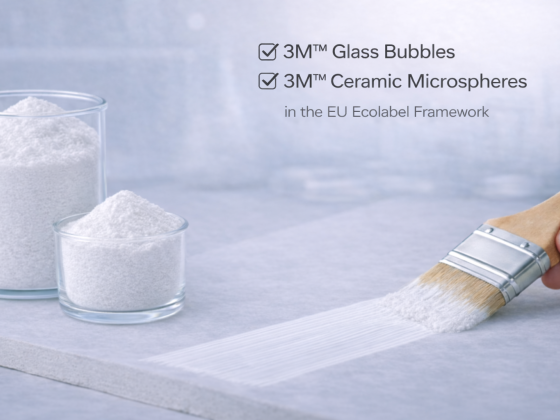
3M™ Glass Bubbles and 3M™ Ceramic Microspheres in the EU Ecolabel Framework
Performance-oriented formulation strategies aligned with EU Ecolabel (EU) 2025/2607
Explore how advanced microsphere technologies can support formulation objectives related to durability, material efficiency and use-phase performance within the EU Ecolabel framework, where compliance depends on applicable criteria and verification.
The updated EU Ecolabel framework for paints and coatings, introduced under Commission Decision (EU) 2025/2607, builds on earlier performance/use-efficiency testing and formulation requirements, while Commission Decision (EU) 2025/2607 revises product groups and criteria.
Compliance assessment includes applicable performance considerations during use and service life, together with formulation composition and emission controls.
As a result, material selection becomes a strategic formulation decision, directly influencing whether a coating can meet performance requirements related to durability, efficiency, and life-cycle impact.
Table of Contents:
Related Technical Articles
The Technology Behind Anti-Condensation Paints (Part 1)
Boosting Anti-Condensation Paints with 3M™ Glass Bubbles
3M™ Glass Bubbles and 3M™ Ceramic Microspheres in the EU Ecolabel Framework
EU Ecolabel Performance Starts with Formulation Design
Possible formulation-development objectives that may support coating sustainability strategies include:
- Material efficiency per square meter
- Durability and service life
- Performance during the use phase
- Reduced maintenance and repainting frequency
These formulation-development objectives may be influenced by parameters such as dry-film density, internal film structure and thermal behaviour, but particle density or thermal properties do not automatically establish Ecolabel compliance or represent a named regulatory thermal-performance test. Relevance depends on the applicable product-group annex criteria and required testing.
The Role of 3M™ Glass Bubbles in Ecolabel-Oriented Formulations
3M™ Glass Bubbles are hollow, low-density glass microspheres that may support formulation objectives such as reducing coating density and influencing thermal properties.
Potential formulation effects may include:
- reduced formulation density depending on grade and loading
- influenced thermal properties of the coating system
Potential effects depend on the selected formulation, film build and application conditions. Particle properties or typical calculated values alone do not demonstrate maintained finished-film function, equal-function savings per m², reduced thermal bridging or a specific Ecolabel performance outcome.
These effects may support formulation objectives related to coating performance, but any contribution to applicable Ecolabel criteria requires assessment against the relevant product-group requirements.
3M™ Ceramic Microspheres and Coating Durability
For coatings where mechanical resistance and long-term stability are critical, 3M™ Ceramic Microspheres provide a complementary performance function.
Due to the high compressive strength and uniquely shaped filler description of selected white ceramic grades W-210, W-410 and W-610, they may contribute to formulation objectives such as:
- Enhanced scrub and burnish resistance under suitable formulations
- Potential support for packing/loading or formulation objectives described by the manufacturer
These potential benefits are formulation dependent and do not establish quantified service life, mechanical retention over time, maintenance intervals, repainting reduction or validated long-term finished-coating performance.
Durability is a key sustainability driver under the EU Ecolabel framework, as longer-lasting coatings reduce overall material consumption and environmental impact.
Combined Use of Glass Bubbles and Ceramic Microspheres in Formulation Design
Glass Bubbles and Ceramic Microspheres may be considered together in formulation design where their individual properties match target coating requirements.
Potential formulation considerations may include:
- selection of complementary filler properties
- adjustment of formulation parameters for the intended application
Any combined approach requires evaluation of the actual blend and finished coating. Material properties alone do not establish measured synergy, maintained structural integrity, durability, service life or Ecolabel compliance.
Filler Selection and Matched Formulation Evaluation
Traditional mineral fillers remain suitable options for many applications. Depending on formulation objectives, different filler choices may influence coating properties.
Potential comparison factors include:
- comparator identity and loading basis
- film thickness and coverage or opacity
- relevant resistance or performance testing
Any equal-function or material-efficiency comparison requires matched evidence. Particle density alone does not demonstrate coating savings or superiority.
Inorganic glass and ceramic microsphere materials have different compositions from synthetic polymer microparticles. Their regulatory classification and applicable scope depend on the specific grade, surface treatment, intended use and whole formulation assessment; structural-filler use alone does not establish a universal exemption or certification.
From Compliance to Competitive Advantage
3M™ Glass Bubbles and 3M™ Ceramic Microspheres are not certifications of compliance on their own.
They are formulation tools that can support coating performance against key EU Ecolabel criteria when incorporated into well-designed systems and validated through testing.
With an appropriate formulation strategy, they enable the development of coatings that combine:
- Material efficiency
- Durability
- Technical consistency
- Alignment with long-term sustainability objectives
Conclusion
EU Ecolabel assessment includes applicable coating performance considerations during use and over time, with durability and material efficiency influenced by formulation design and verified criteria.
Advanced microsphere technologies can support these objectives when applied within well-engineered formulations and validated through testing.
To discuss performance-driven formulation strategies under the updated EU Ecolabel framework, contact us to explore the role of 3M™ Glass Bubbles and Ceramic Microspheres.
Performance-driven formulation starts with material selection
Sources
European Commission. Commission Decision 2014/312/EU of 28 May 2014, establishing the ecological criteria for the award of the EU Ecolabel for indoor and outdoor paints and varnishes. Consolidated version: 18 July 2022. Annex introduction; criterion 1(b); criterion 3, Table 2 and 3(a). Historical comparator. (See Source)
European Commission. Commission Decision (EU) 2025/2607 of 17 December 2025, establishing the EU Ecolabel criteria for decorative paints, varnishes, and related products, performance coatings and related products, and water-based aerosol spray paints and repealing Decision 2014/312/EU. OJ L, 2025/2607, 22 December 2025. Articles 1–3, 5, 6 and 9; applicable Annex I or II criteria 2–5. (See Source)
3M. 3M™ Glass Bubbles K Series, S Series, iM Series. Issued November 2025, Rev. E (98-0212-4117-6). pp. 1–2; application-evaluation disclaimer, p. 4. (See Source)
3M. 3M™ Ceramic Microspheres. Issued April 2024, Rev. C (98-0212-4187-6). p. 1, introduction and typical properties for W-210, W-410 and W-610; application-evaluation disclaimer, p. 2. (See Source)
3M. 3M™ Ceramic Microspheres: The shape of things to come. Excellent fillers for architectural paints and industrial coatings. Issued April 2024, Rev. B (98-0212-4263-5). pp. 3–6; application-evaluation disclaimer, p. 8. (See Source)
You might also be interested in...
Increasing Time Until Condensation: Advanced Applications of 3M™ Glass Bubbles (Part 2)

You might also be interested in...
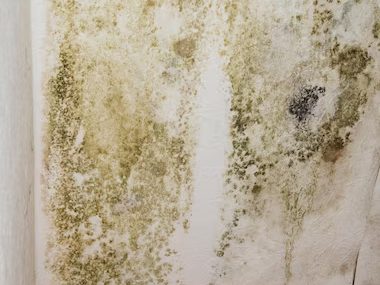
Increasing Time Until Condensation: Advanced Applications of 3M™ Glass Bubbles (Part 2)
How can we help you?

24 Vasilissis Olgas Str. | 15124 | Athens | Greece
Phone: (+30) 213 0907763
Reg. Nr.: 181737601000
VAT. Nr.: 802731899
